

Identification
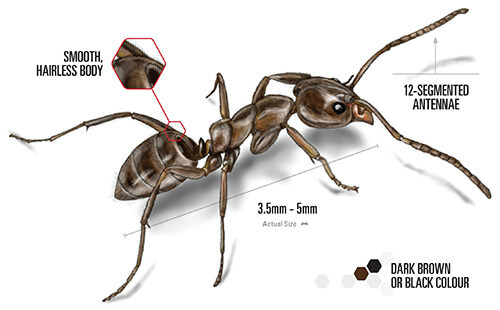
- Colour Dark brown to black in colour, shiny appearance
- Size About 3 mm, queens can be as large as 12 mm
- Body Argentine ants have a triangular head and an unevenly shaped thorax, which is connected to the abdomen with a single segment.
Habitat, Diet, Life Cycle
How long do Argentine ants live?
Argentine worker ants may live for 10 to 12 months, and their queens can live for several years. However, the lifespan of Argentine ants can vary depending on various factors, such as the individual’s role in the colony and environmental conditions.
Overall, the longevity of an ant colony depends on its queen. In the case of the Argentine ant, many queens can be present per nest and can lay up to 60 eggs every day. It’s possible for additional queens to undergo budding, whereby they and some worker ants have sectioned apart from the main colony but continue to thrive. If a queen dies in an Argentine ant colony, there is another queen ready to take her place and maintain the population. Ultimately, these ant nests can live on for long periods due to their ability to withstand queen challenges and maintain the constant hatching of workers.
Additionally, the Argentine ant is aggressive towards other ant species and insects. They will attack and destroy colonies to ensure that theirs is protected and given the best chances to thrive.
What do Argentine ants eat?
Argentine ants are opportunistic feeders, meaning they will consume any available food source. They have a particularly strong attraction to sugary substances, which make up a significant portion of their diet. Argentine ants can feed on:
- Plant nectar, or honeydew produced by aphids and other sap-sucking insects
- Fruit juice, either naturally derived or artificial
- They also tend to attack and kill other small insects, such as spiders, caterpillars, and beetles, for protein-rich food.
In addition to these natural food sources, Argentine ants have a preference for human food scraps, and they can easily access these in homes, gardens, and trash cans. They are especially attracted to sweet and greasy foods, making them a common nuisance in kitchens and pantries.
Argentine ants have a remarkable ability to form cooperative groups to exploit new food sources. They can recruit thousands of workers to a food trail, which can stretch for metres or even kilometres. The workers leave behind a pheromone trail to guide other ants to the food source, allowing them to return repeatedly to the same spot. This behaviour can result in massive infestations and has contributed to their success as an invasive species in many parts of the world.
Where do Argentine ants live?
You might find Argentine ants outside under damp areas like rocks or indoors where moisture is present, such as behind bathroom walls or in crawl spaces.
It’s common for Argentine ants to nest in several different areas around your property and often connect these sites through tunnels. Due to their ability to have multiple queens and coexist with larger colonies (sometimes referred to as super colonies), Argentine ant nests can extend over vast areas, both outside and inside.
- Moist habitats outdoors can include soil under mulch, concrete pads, rocks, and wood debris such as fallen logs or dead trees. This provides the optimal conditions for these ants to dig and nest and can help foster their populations.
- Inside, Argentine ants may nest close to food sources or in similar outdoor environments with increased moisture. Kitchen walls, bathroom vents, crawl spaces, and anywhere where water leaks or collects could be an area where these ants build a nest.
Geographically, Argentine ants are native to South America, specifically from regions such as Argentina, Brazil, Uruguay, and Paraguay. However, they have spread throughout the U.S., Canada, and other corners of the globe and have become an invasive species due to their aggressive nature. They can outcompete and displace native ant species, causing ecological imbalances.
Why do I have Argentine ants?
Argentine ants originate in South America but are an invasive species which has been carried all over the world by humans.
They are attracted to moist areas and build shallow nests in floor cracks, wall cavities, or between the timbers under your home.
Are Argentine ants dangerous?
Argentine ants are generally not considered dangerous to humans. Unlike some other ant species, they do not have a venomous sting or bite. However, they can be a nuisance when they infest homes and gardens, as they can contaminate food, damage plants, and cause unsightly trails.
Argentine ants are a nuisance that will get into your food, as well as pet food. They prefer sweet or greasy foods but will also eat meat, eggs, and even other insects. Unlike other species of ants, Argentine ant colonies are also closely related and can share workers, with smaller colonies joining forces to make giant super colonies. All of this gives Argentine ants the ability to survive conventional over the counter ant baits poisons and household remedies, so it is crucial to get professional help quickly to stop your home from being overrun.
In some cases, Argentine ants can indirectly harm humans by competing with and displacing native ant species, which can have negative ecological impacts. They can also create ideal conditions for honeydew-producing insects, such as aphids and mealybugs, which can attract other pests like ants and wasps.
However, Argentine ants are not known to transmit diseases to humans, and they are not a direct threat to human health or safety. In rare cases, individuals with severe allergies or asthma may experience an allergic reaction to the presence of Argentine ants. In such cases, it is essential to seek medical attention promptly.
Overall, while Argentine ants may not pose a significant threat to human health, they can cause problems for homeowners and gardeners and should be dealt with promptly to prevent infestations.
How to get rid of Argentine ants?
Preventative measures can be helpful if you are looking to keep Argentine ants out of your home. Similarly, the below tips can help if you are dealing with an infestation:
- Seal all gaps and cracks in your home using caulking or another sealant appropriate for the surface. Focus on areas close to moist soil where Argentine ants often nest. Inspect these sealed areas regularly, especially during spring and fall.
- Clean and sanitize all surfaces daily to eliminate potential food sources for Argentine ants. Ensure that there are no crumbs or food residues left behind and that you frequently wipe down crevices where ants may be hiding.
- Store food in airtight containers and refrigerate cold foods to protect them from being seen as potential food sources. Reduce the number of open bags or boxes in your kitchen, and refrain from leaving food out overnight.
- Remove any yard debris and objects, including fallen leaves, trees, and grass clippings, as these provide sheltered areas for insects. Argentine ants seek moist areas to build their nests, which can be caused by these types of debris.
- Trim back trees that touch your home. Argentine ants do not nest in trees but use them as a route to find resources and may have nests nearby trunks or other outdoor plants. By eliminating this access point, you can reduce the likelihood of ants entering your home.
- Clean gutters and downspouts regularly to prevent moisture accumulation. Wetness creates an ideal environment for Argentine ants to nest and create tunnels or routes. Clogged gutters and downspouts with yard debris retain moisture, attracting ants to the area.
If your Argentine ant issue grows beyond what you can handle, don’t hesitate to contact your local Orkin Pro for professional ant control for your home or commercial business.
Other pests related to Argentine Ants

Residential Services
Protect your home from unwanted pests with customized pest control treatment
Residential ServicesCommercial Services

100% Satisfaction or Money Back Guarantee
Resolving your pest problem is our #1 priority. If re-treatment is required, we'll provide immediate services at no extra cost. If your expectations are not met, we guarantee a full refund of your service payment.
Remove pests from your home, and stop them from coming back
We work hard to listen, understand and assess your unique situation. Request a free, no-obligation estimate today for a customized pest program that fits your needs.
Request a Free Home EstimateRequest a Free Business Consultation